Notice
[Artist Interview] Korea-Scotland Collaborative Theatre Workshop <T…
페이지 정보
Date : 2025.12.29
본문
Korea-Scotland Collaborative Theatre Workshop <TETHER>
- Robbie Gordon & Jack Nurse, Playwright and Director
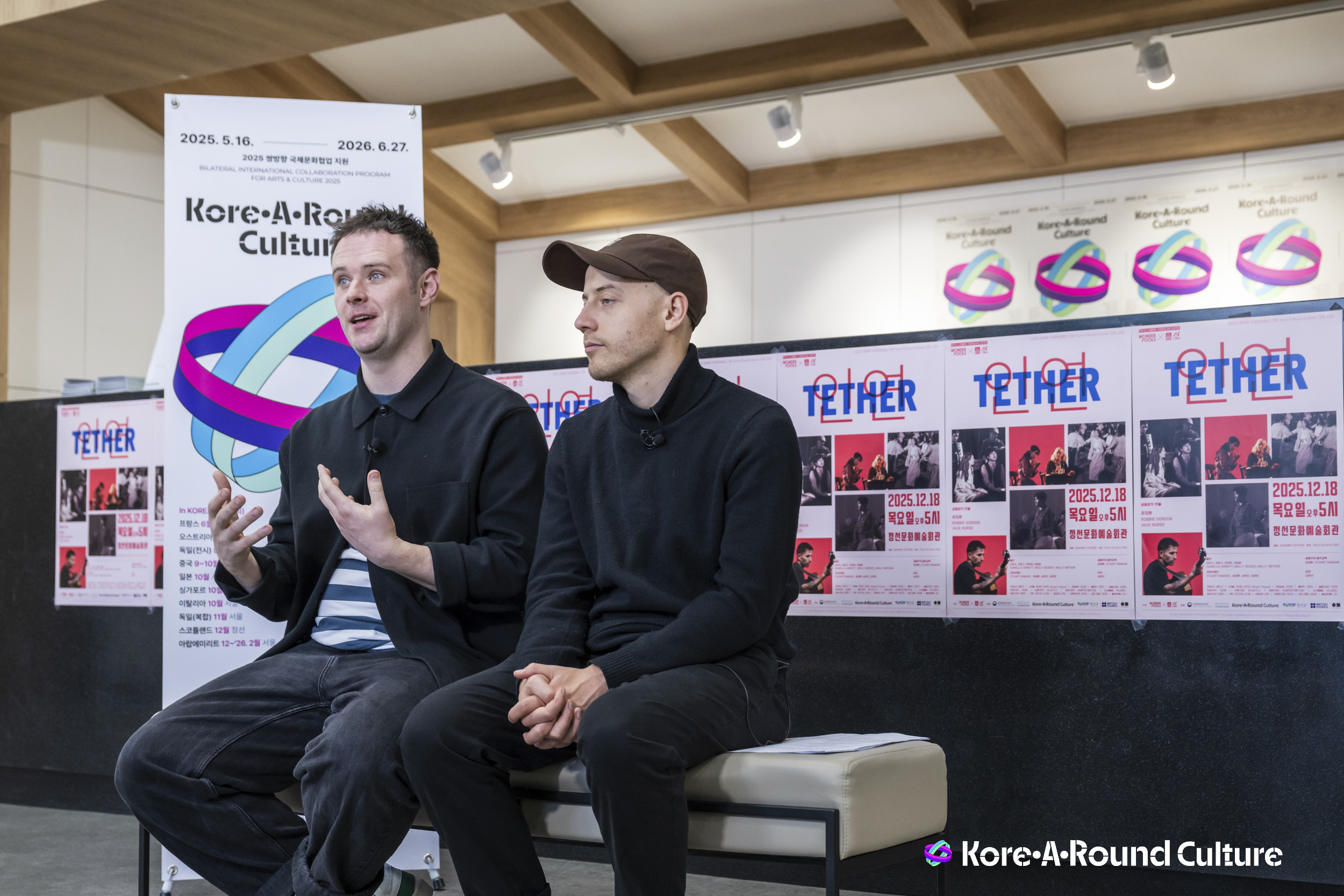
Q1. Please introduce Wonder Fools, and today’s performance.
Artistic Director Robbie Gordon : Wonder Fools Theater Company is based in Glasgow, but we create work across the UK as well as internationally. We focus on socially engaged theatre, which means collaborating with people and local communities while creating work that is nationally ambitious and places real people and their stories at the center of the creative process.
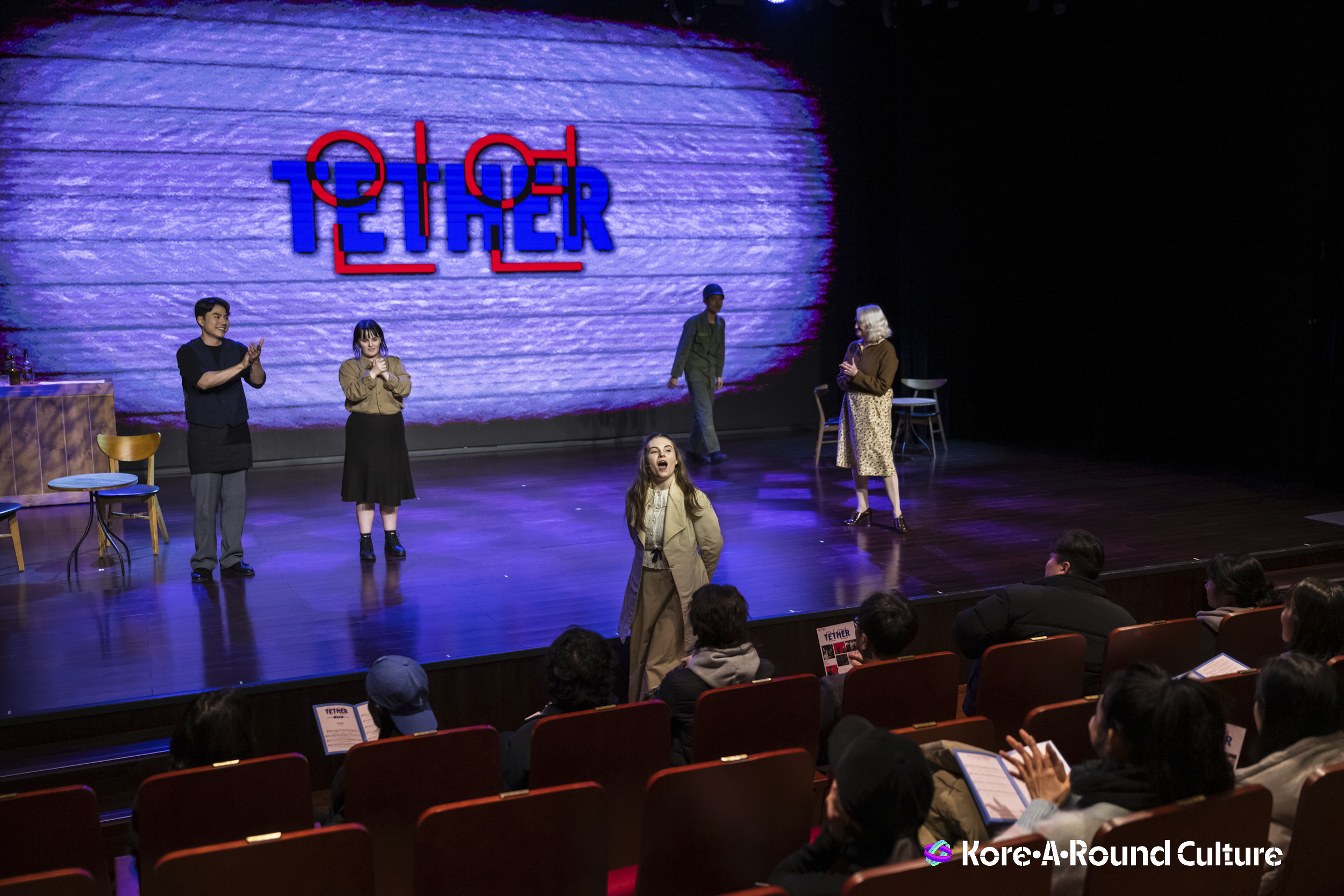
Q2. What was your experience like working with the Korean performance team?
Artistic Director Jack Nurse : This collaboration has been an incredibly remarkable process for us. It was the first time we had applied our socially engaged theatre-making approach in collaboration with a theatre company from a different country and cultural context. Working with artists from a region with a different language and cultural background allowed us to learn a great deal, and it became a creatively meaningful journey in many ways. Exploring the differences between the two theatre companies, while also discovering the similarities and shared values between us, was particularly impactful. In that sense, we believe this collaboration was a meaningful experience on multiple levels.
Artistic Director Robbie Gordon : It was truly a pleasure to work with such outstanding Korean performers and creators. We were deeply impressed by the genuine commitment demonstrated by every member of Theater SAN, and our collaboration with Minjin Hong, the producer of Theater SAN, was also excellent. We learned a great deal from one another, and the process itself was both fascinating and highly rewarding.
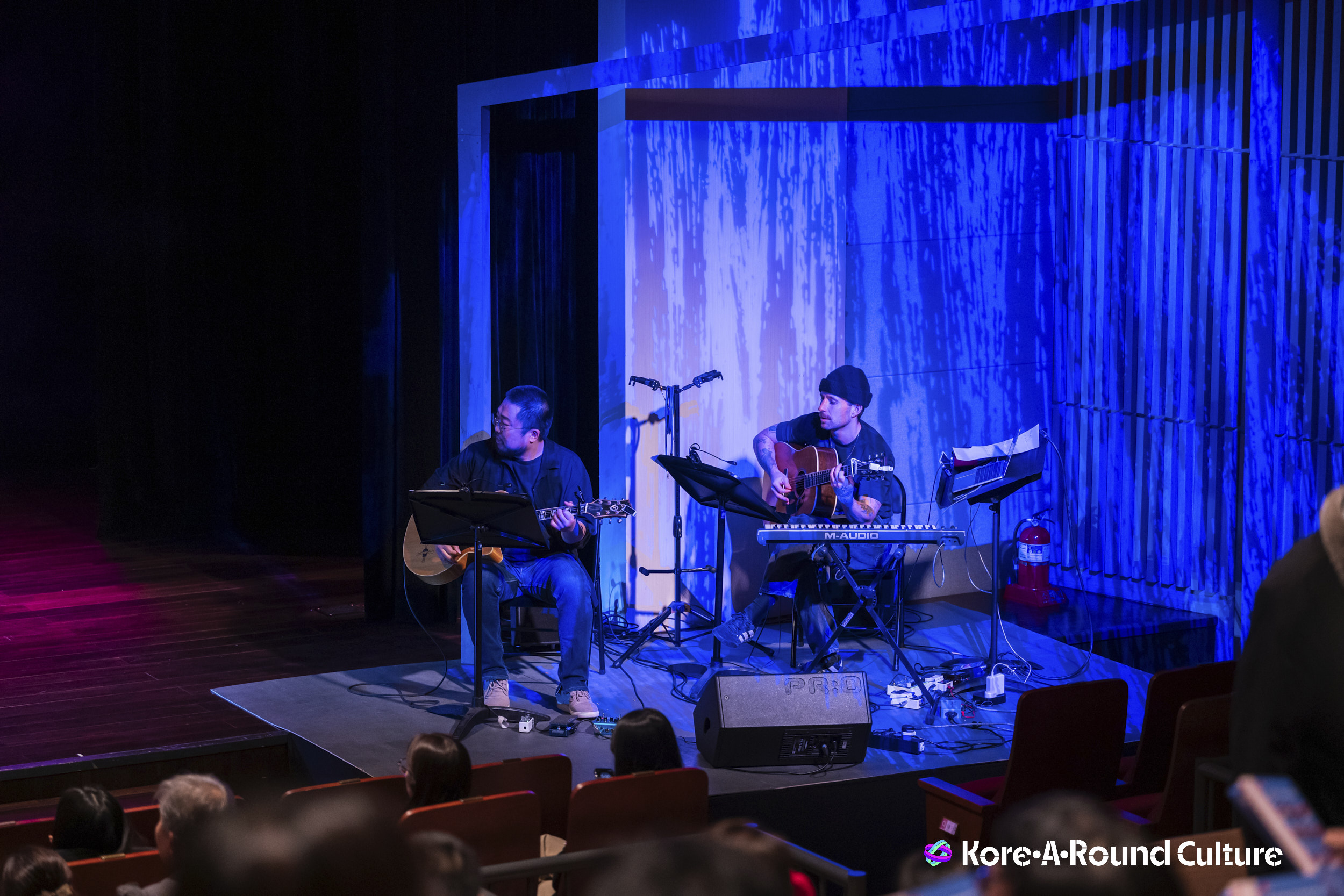
Q3. What points were vital while collaborating with Theater SAN?
Artistic Director Jack Nurse : In many ways, we began from a very simple starting point. We started with songs that hold deep social significance in each country and culture, Arirang from Korea and Auld Lang Syne from Scotland. Together, we spent time learning these songs musically while also exploring why they are important in each country and what historical meanings they carry. Through that process, we naturally began to explore other folk songs from both countries, as well as traditional forms of movement.
We also looked closely at the many stories embedded within each other’s cultural heritage. As we did so, the similarities, parallels, and small coincidences between the two countries began to weave themselves into a single narrative. Ultimately, we sought to create a clear and cohesive story that connects both countries and both theatre companies.
Artistic Director Robbie Gordon : One of the most memorable moments for me was coming to Jeongseon and learning about the local culture while becoming fully immersed in it, everything from storytelling and music to food. Likewise, the time when we welcomed the Korean team to Scotland in August and September felt equally significant. Those moments were crucial in allowing the story to move beyond being simply “a good story” and develop into something that is both specific and culturally universal. Another fascinating aspect of this process was realizing that the story we created is deeply specific to Glasgow, while also being deeply specific to Jeongseon at the same time. Despite that specificity, we feel that the story resonates with audiences around the world.
Artistic Director Jack Nurse : For example, one of the many connections we discovered involved the use of Auld Lang Syne, a song that is famous not only in Scotland but globally. It is commonly sung on New Year’s Eve and is likely the most well-known Scottish song. We learned that the melody of Auld Lang Syne was used in Korea in the early 20th century as part of the marches during the March 1st Movement. At that point, we realized that Korea and Scotland had been connected in remarkably profound ways from the very beginning.
There were many other astonishing coincidences as well. While exploring traditional movement, we encountered Ganggangsullae*, which immediately reminded us of Gay Gordons, one of the most famous Scottish ceilidh dances. The hold used in the Gay Gordons is exactly the same as the one used in Ganggangsullae. In that moment, we found ourselves exclaiming, “This is the Gay Gordons dance!” It was almost unbelievable. Beyond this, we also discovered that the first person to translate the Bible into Korean was Scottish, among many other remarkable connections.
*Ganggangsullae : A traditional Korean circle dance that originated in the southern coastal regions of Korea, especially Jeolla Province.
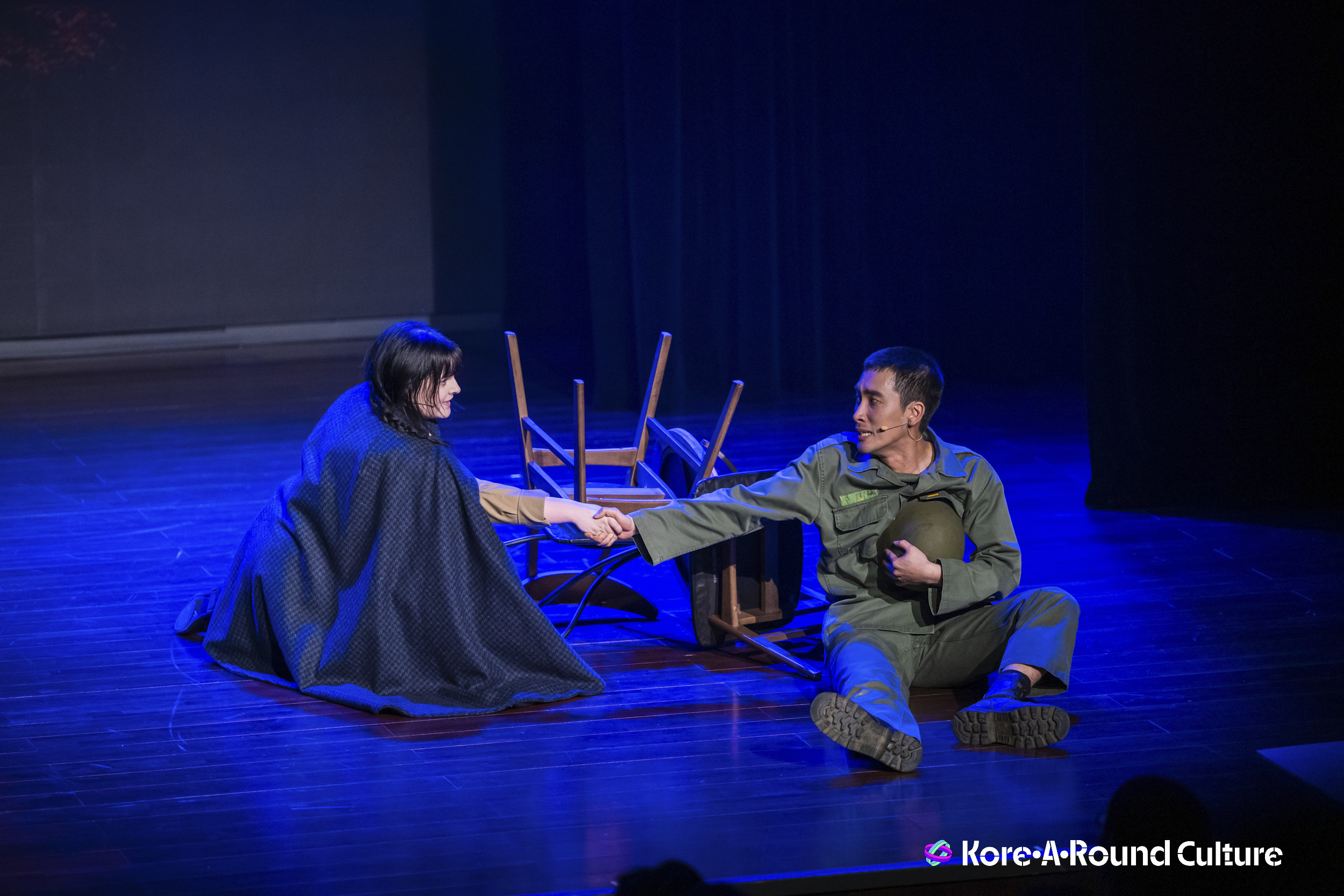
Q4. What was the most satisfying part of this collaboration?
Artistic Director Robbie Gordon : It felt like every day was about trying something new. Among those moments, the most exciting for me was seeing Korean choreography and Scottish choreography, Korean music and Scottish music come together to create something entirely new, something audiences may never have seen before. To me, these two cultures and musical styles did not initially feel like an obvious or easy combination. Yet through this process, I believe we created something truly special and compelling, and I am eager to share it with audiences.
Artistic Director Jack Nurse : Another particularly memorable experience was the showcase we held in Glasgow in September. As theatre-makers, we often say that rehearsals and the creation process account for only 50 percent of the work. The remaining 50 percent is completed when the piece finally meets its audience. For that reason, one of the most satisfying moments of this collaboration was when we presented the work to an audience in Edinburgh for the first time a few months ago. It was the first time Scottish audiences encountered the performance, and we heard laughter even during lines delivered in Korean, while some audience members were moved to tears by the end. As Robbie mentioned, although this work tells a very specific story rooted in two cultures, we hoped it would also carry emotions and resonance that are universally shared.
Witnessing the audience’s reactions in real time allowed us to see that the direction of the story we were pursuing, and the emotions we hoped to convey, were truly coming across. That experience was incredibly powerful. Now, I am in Jeongseon, with only about two hours remaining until our first performance in front of a Korean audience, and I feel a great sense of anticipation.
As theatre-makers, we believe that rehearsals are always only 50 percent of the work. The other 50 percent is completed when an audience experiences the story directly. That is why I am truly looking forward to tonight’s performance.
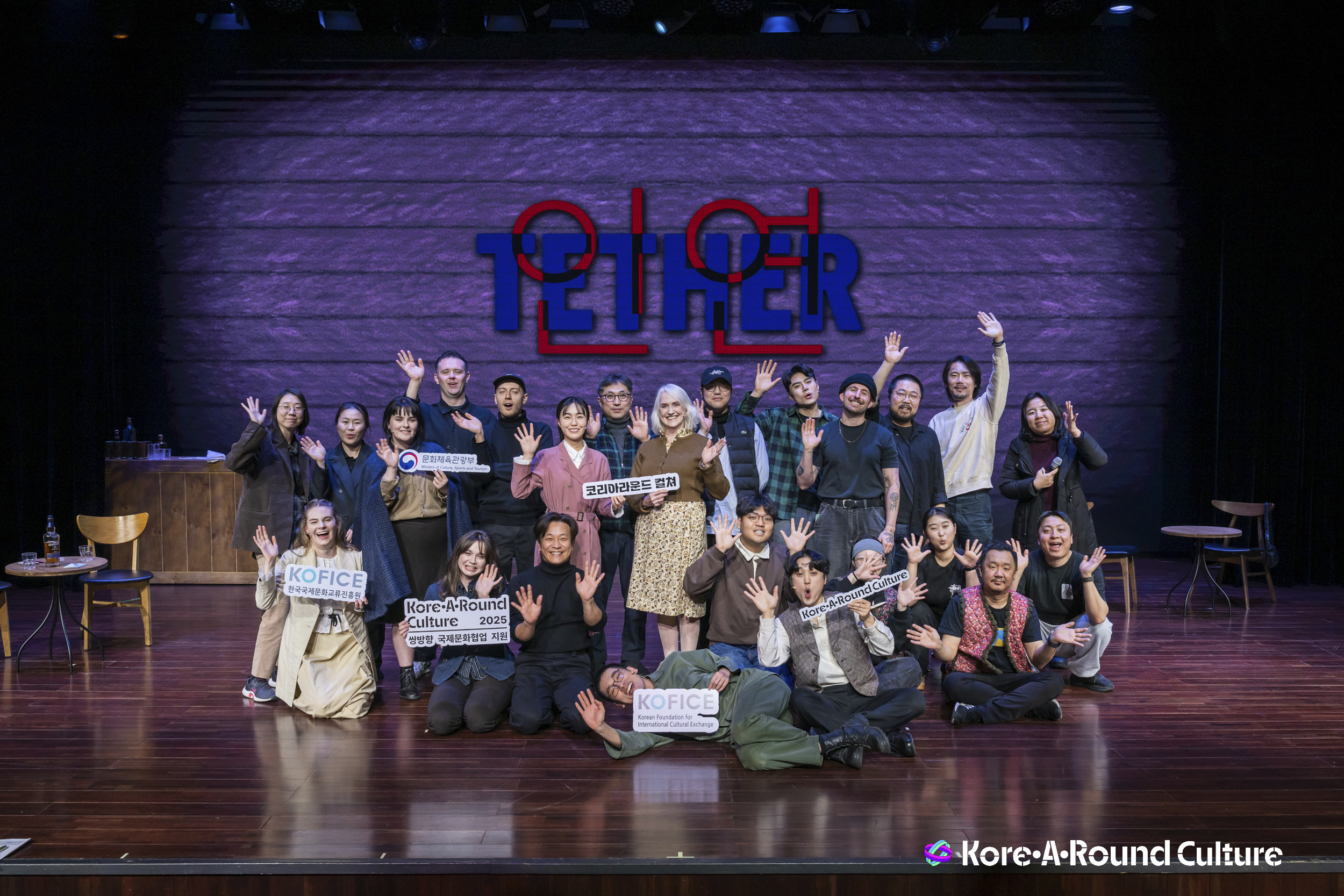
Q5. How was your experience participating in <KORE・A・ROUND CULTURE>?
Artistic Director Robbie Gordon : I believe this is an excellent initiative. On a personal level, I would say that it is important to find inspiring partners with whom you genuinely want to collaborate. For anyone who is eager to learn about another culture, immerse themselves in it, and create new work, this is precisely the kind of project they should be involved in. Overall, it has been a truly wonderful experience for me. From the very first conversations about the possibility of international collaboration with Hong Minjin of Theater SAN, the producer, and Hyunwoo Nam, the choreographer of Theater SAN, everything felt perfectly aligned. This project served as an outstanding platform for exploration, learning, and creation.
Artistic Director Jack Nurse : For me, engaging in an international collaboration like this represents a tremendous opportunity for growth. Everything I experienced here, from Korean culture and theatre-making practices to food and language, was both striking and inspiring. However, when speaking about work of this nature, I believe the most important concept is ultimately exchange, specifically international exchange. Through this process, I also learned a great deal about myself as an artist.
Working with Theater SAN has given us so much, and this experience will have a lasting influence on how Wonder Fools continues to develop and evolve our work as theatre-makers. While it was meaningful to gain a deeper understanding of Theater SAN in Korea, what left the strongest impression on us was how much we also came to learn about ourselves in the process. This is why I believe that exchange between different countries and cultures is truly essential.