Notice
[Artist Interview] Korea-Scotland Collaborative Theatre Workshop <T…
페이지 정보
Date : 2025.12.29
본문
Korea-Scotland Collaborative Theatre Workshop <TETHER>
- Yoon Jung-hwan, Playwright and Director
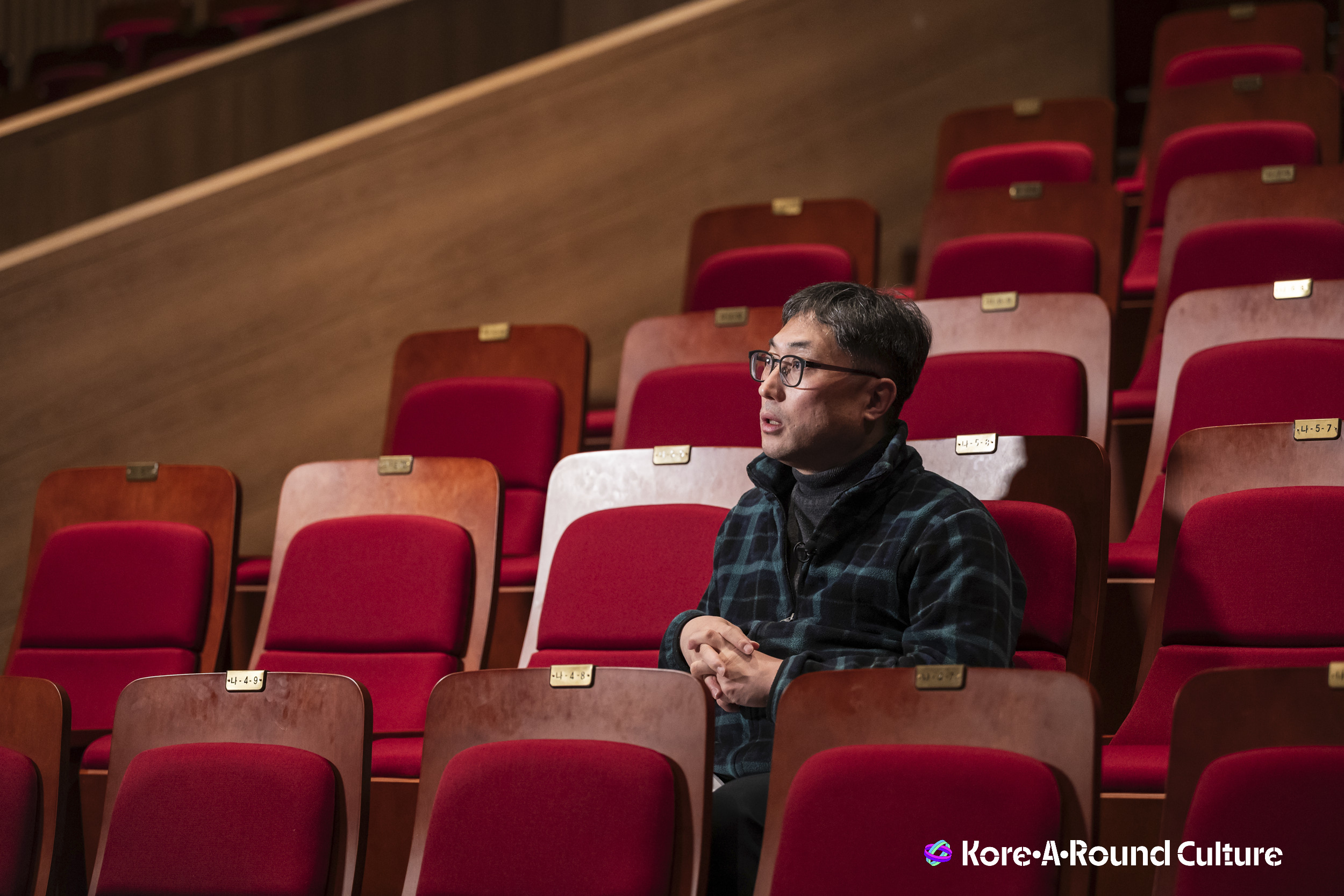
Q1. Could you introduce your theater company and yourself?
My name is Yoon Jung-hwan, and I am the artistic director of Theater SAN. I work as both a playwright and director. Our theatre company has been active for approximately 23 years. Since our founding in 2002, we have primarily created and performed original works together with our ensemble members. For this project, we are collaborating with artists from outside Korea, which is a new experience for us. It is a pleasure to be part of this collaboration.
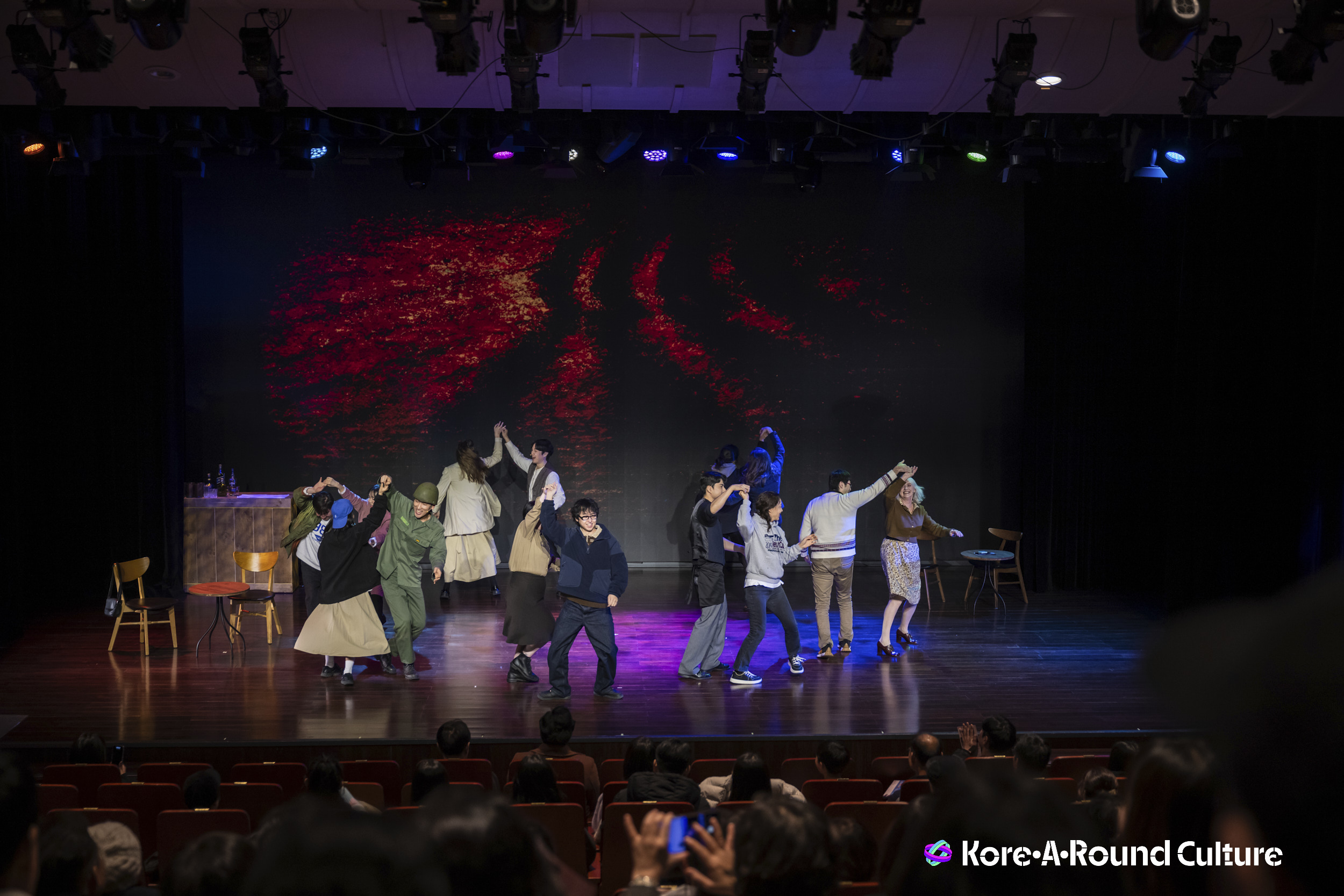
Q2. What themes or messages does your latest work TETHER explore?
The project began with the question, “In what ways has Korea engaged in exchange with other countries through music or performing arts?” This work was inspired by one of our previous productions, ‘The Secret Song’. In that performance, the March 1st Movement of 1919 is referenced, and at that time the Korean national anthem was sung using the melody of Auld Lang Syne, with Korean lyrics added. It is a Scottish folk song that is widely known around the world. We began to imagine what might have happened if that song had entered dialogue with Arirang, one of Korea’s most representative pieces of music. That imagination became the foundation of this work. As the project developed through meeting and collaborating with the Scottish team, our ideas deepened further. We discovered that Scotland also has many folk songs like Arirang, songs that vary by region and share comparable characteristics. Scotland itself also has deep historical connections with Korea. It was one of the countries that participated in the Korean War, and the first person to translate the Bible into the Korean language was Scottish. With all these connections in mind, we felt it would be meaningful to explore the relationship between the two countries through the songs Arirang and Auld Lang Syne, and that idea became the starting point of this project.
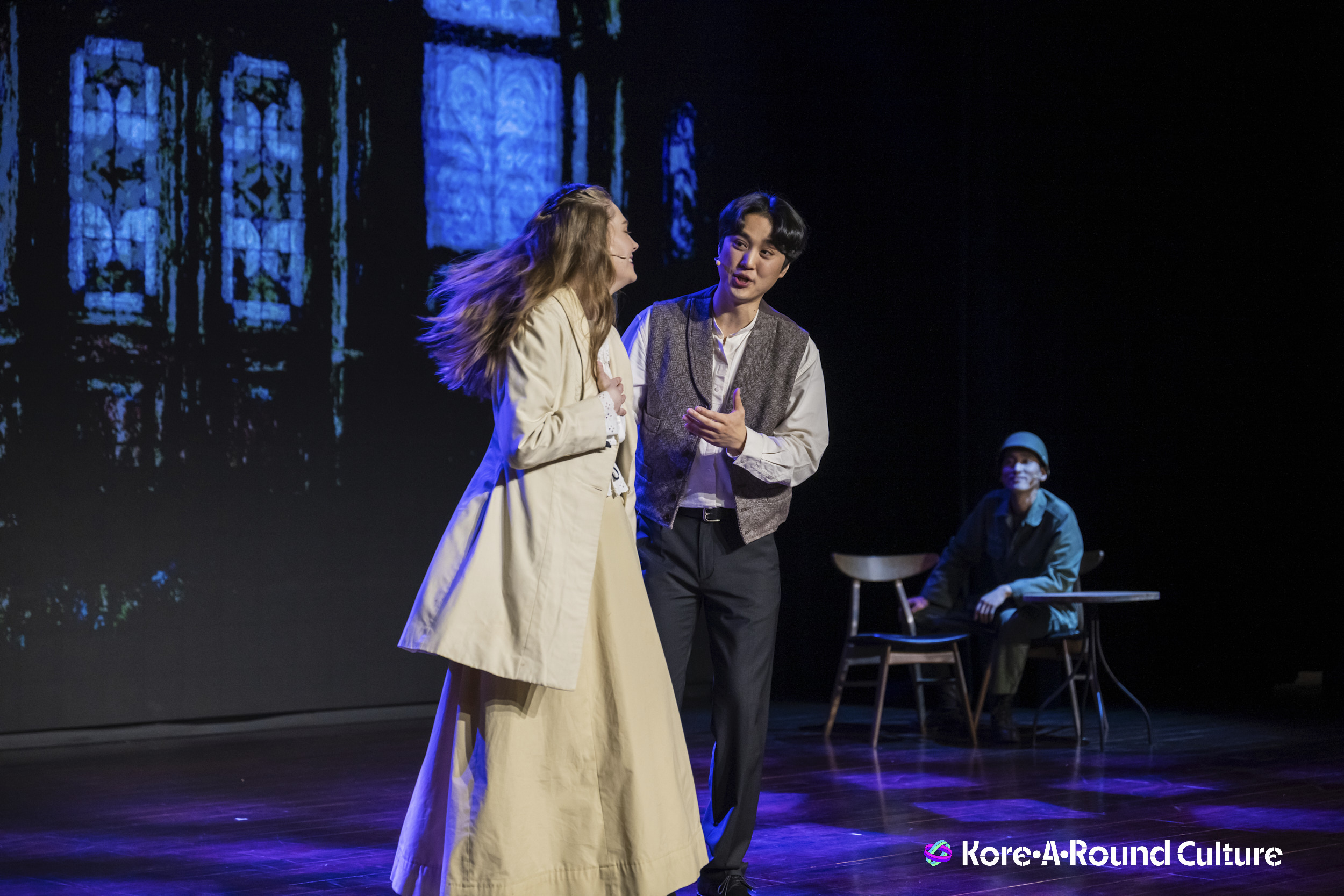
Q3. How did your collaboration with the Wonder Fools begin?
Last year, our company’s producer participated in an exchange program in Edinburgh and saw a performance by Wonder Fools. Afterward, she suggested that it might be meaningful for their company and our Korean theatre company to engage in an exchange. Through that process, we learned about elements like the song Auld Lang Syne. We felt that these various points of connection could be woven into a single performance, and that collaborating with the Wonder Fools team would be an ideal way to do so. Wonder Fools also has extensive experience in collective creation, and we believed that working together would be mutually beneficial. That is how this collaboration came to begin.
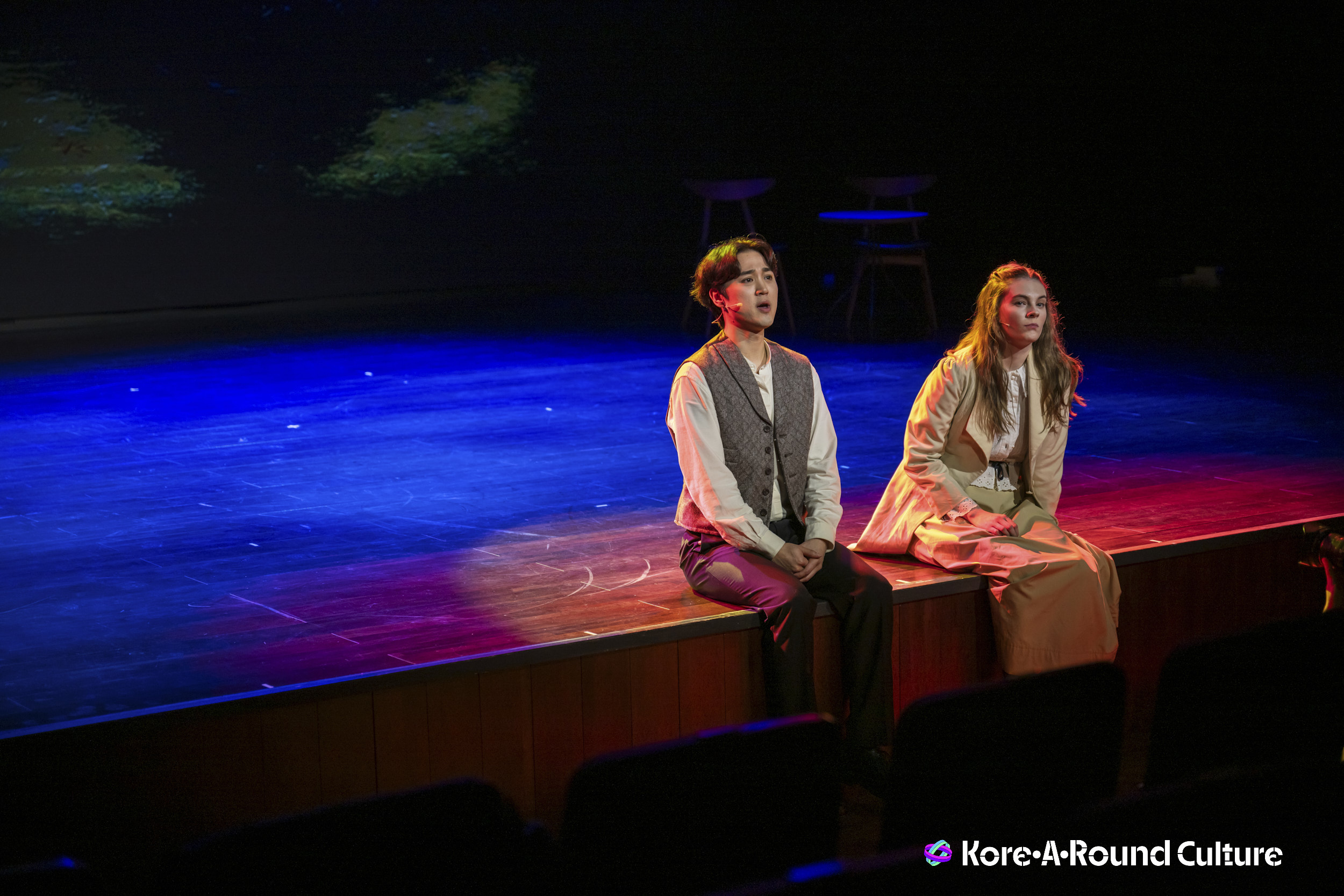
Q4. What was the most satisfying part of this collaboration?
Beyond our collaboration with Wonder Fools, we found that working with international partners can make it significantly easier to expand beyond Korea. For Korean companies, attempting to enter overseas contexts on their own can be extremely challenging. However, by collaborating with teams that already have a base in another country and a deep understanding of the local culture, it becomes much easier to extend one’s reach. In that sense, we felt that our partners could also serve as a bridge to other opportunities and regions. This project already seems to be developing in that direction. In fact, a theatre has contacted us about the possibility of continuing our collaboration for a performance in Edinburgh next year. From that perspective, we feel that we have achieved the goals we initially set out to accomplish. I believe that if more companies actively participate in initiatives like this, they may find it easier to access overseas projects and international opportunities that were previously unfamiliar or difficult to reach.
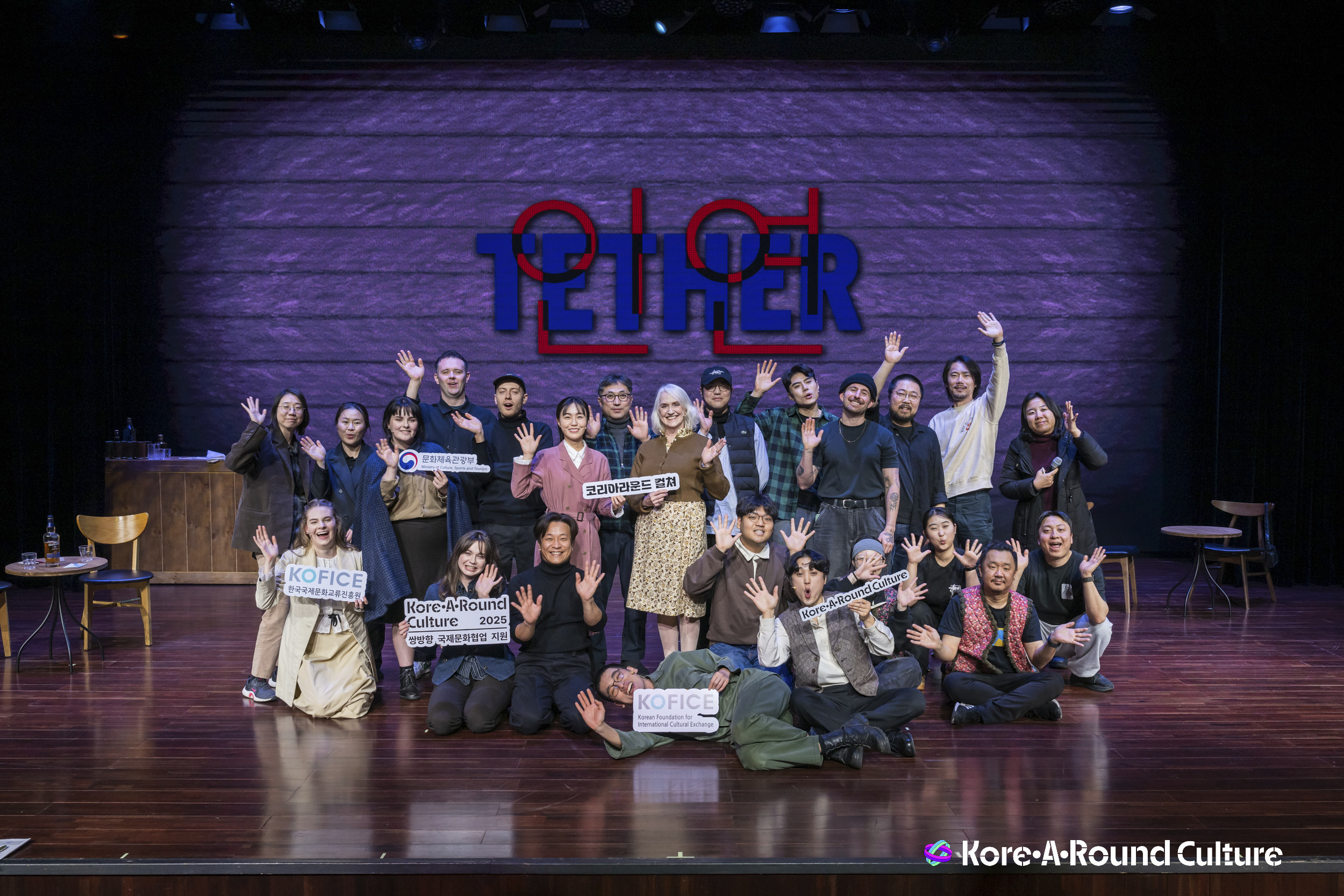
Q5. How was your experience participating in <KORE・A・ROUND CULTURE>?
Rather than simply inviting an overseas team or participating through an invitation, this project was structured as a workshop based on genuine co-creation. The entire process lasted nearly a year, and it was far from easy. We had to spend two to three weeks at a time abroad, and the international team members also stayed in Korea for extended periods. However, it was precisely through this process that we were able to gain a deeper understanding of what worked well in collaboration and what did not. In that sense, this was cultural exchange in the truest sense of the term, offering many insights that could only be acquired through direct experience. I believe that what we learned through this hands-on process will serve as an asset when we collaborate with other teams in the future.