
Notice
[Artist Interview] Korea-Germany Co-Curated Exhibition – Chul Yong CHO…
페이지 정보
Date : 2025.10.16
본문
Korea-Germany Co-Curated Exhibition <uni form: Broken Twill>
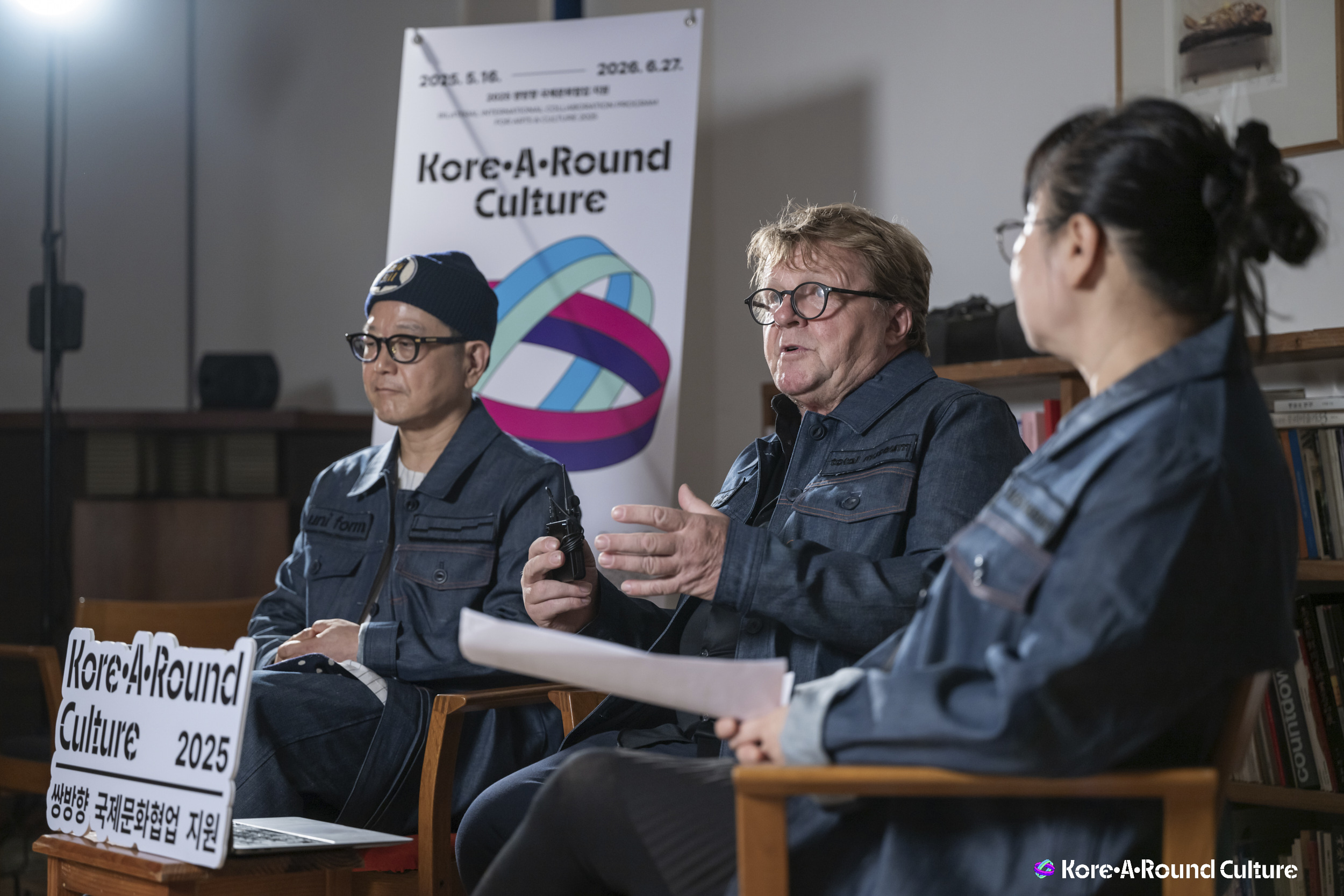
- Chul Yong CHOI (Artist), Nathalie Boseul SHIN (Chief Curator of Total Museum), Johann Nowak (Artistic Director of P61)
Q1. Hello, could you briefly introduce yourselves?
Curator Shin Bo-seul: Hello, I’m Shin Bo-seul, Chief Curator at Total Museum of Contemporary Art. Total Museum is Korea’s first private contemporary art museum and will celebrate its 50th anniversary next year. We don’t only exhibit contemporary artworks. We also present media art, architecture, music, literature, and various educational programs. Perhaps because of its name, “Total,” the museum truly engages in all-encompassing cultural and artistic activities.
Art Director Johann Nowak: First, I’d like to thank you for inviting me. My name is Johann Nowak, and I am the Artistic Director of P61, located in Berlin. Early in my career, I had the opportunity to connect with the Korean art scene.
Artist Chul Yong CHOI: Hello, I’m artist Chul Yong CHOI. I work as a contemporary artist and also teach in the Department of Fiber Arts and Fashion Design at Hongik University.
Q2. Could you introduce the exhibition ?
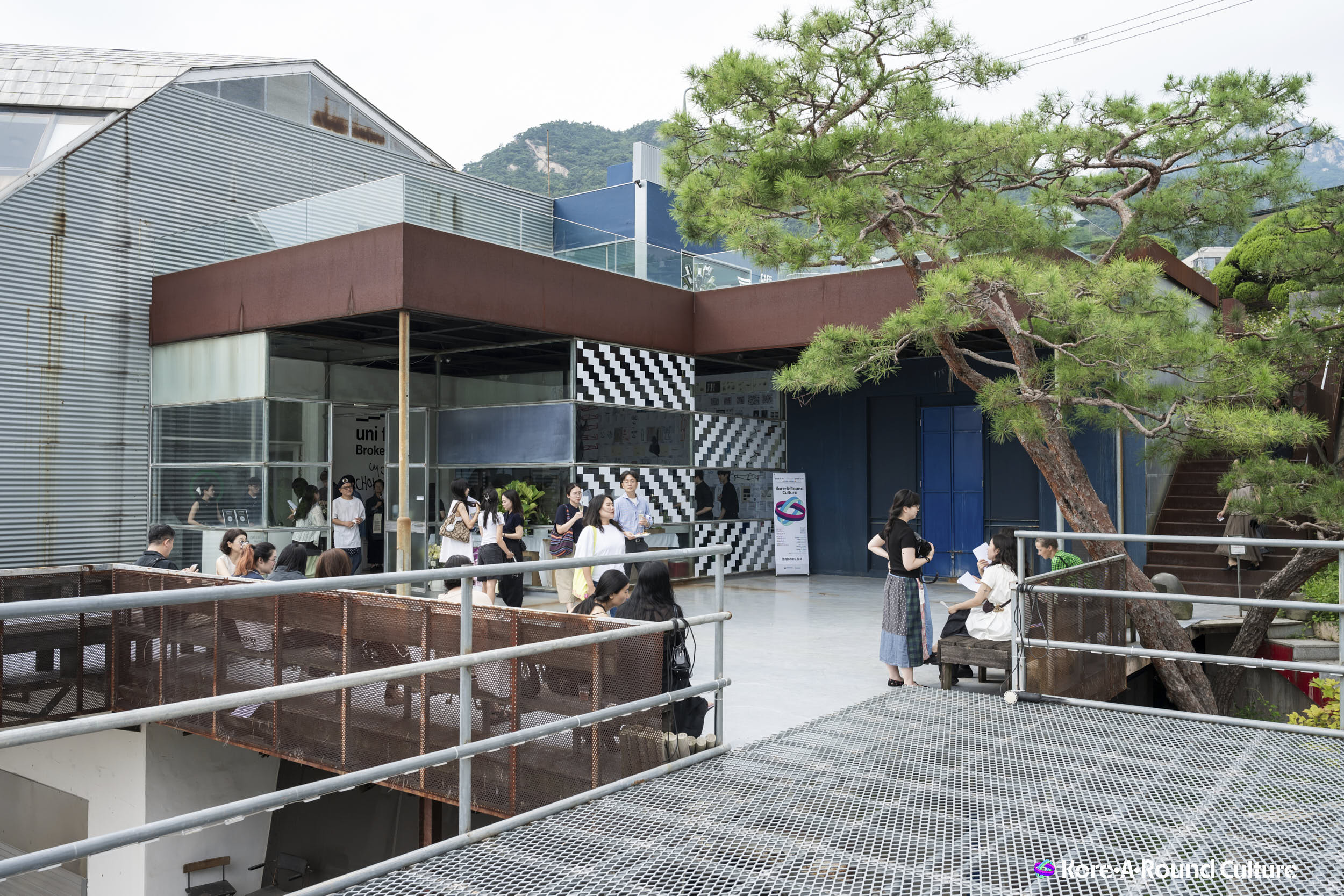
Curator Shin Bo-seul: This exhibition, titled Uni Form: Broken Twill, explores the dual nature of uniforms — while they give a sense of belonging, they also erase individuality. We wanted to capture this tension, the feeling of unity intertwined with disruption, which led to the creation of ‘Uni Form: Broken Twill’. It’s an exhibition and a platform that examines the concept, social meaning, and history of the uniform as a whole. It’s also my first time attempting a project in this kind of format.
While thinking about how to approach collaboration, I began discussing ideas with artist Chul Yong CHOI. In his artistic practice, especially within the field of fashion, “uniform” has been a key theme. He has often worked with the concept of workwear.
Artist Chul Yong CHOI: “Broken Twill” refers to a type of *twill weave that changes direction midway, allowing for great variation. Although uniforms are standardized, there’s still a sense of fracture and freedom within that structure. That’s why we chose the phrase “*&Broken Twill” as the central theme. I thought it reflected our own lives as well.
Note:
*Twill weave: A type of fabric where warp and weft threads cross diagonally, creating visible ridges on the surface.
**Broken twill: A variation of twill weave in which the diagonal lines are interrupted or reversed, producing irregular surface patterns.
Q3. How was the process of co-curating this exhibition between the two countries?
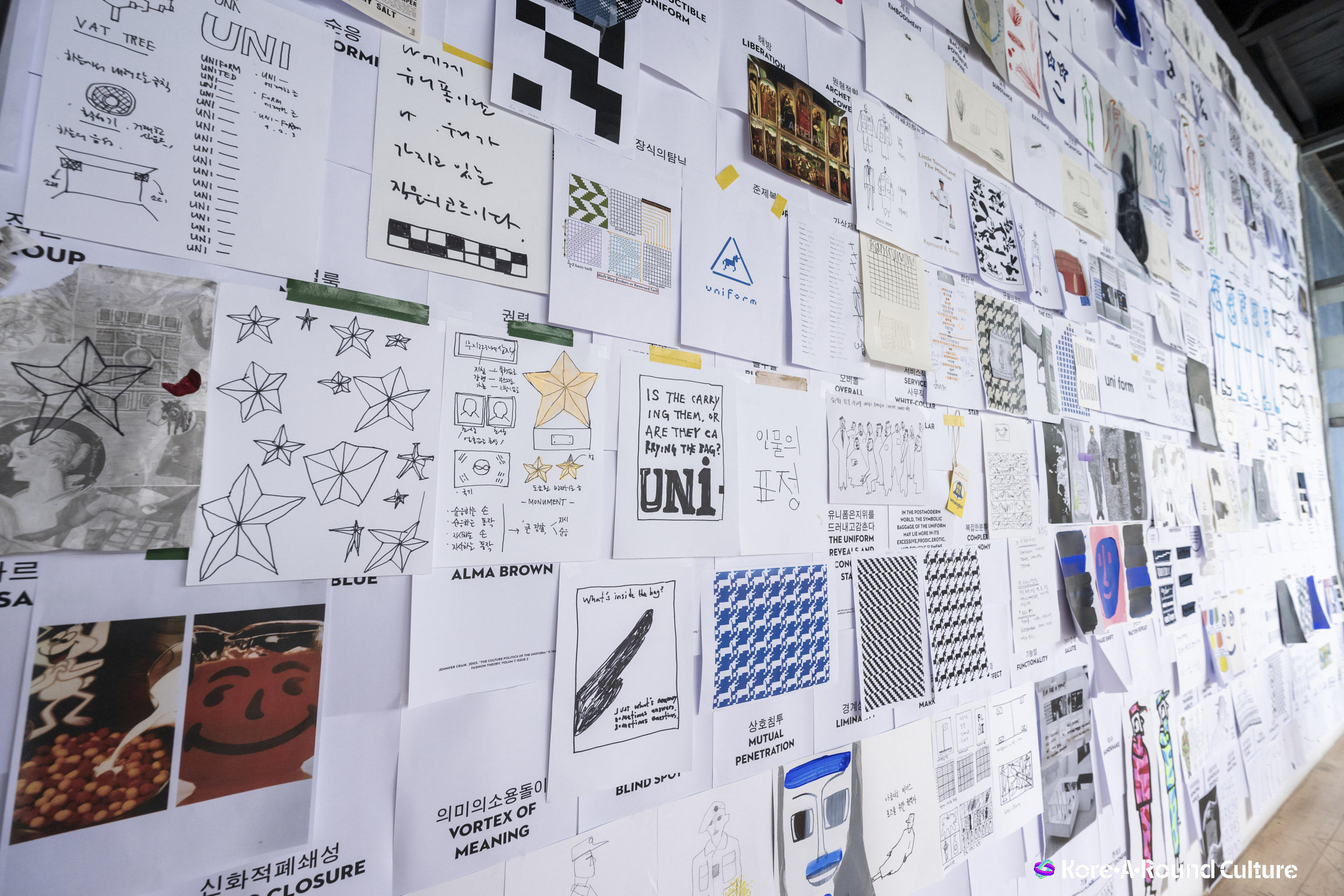
Curator Shin Bo-seul: For an exhibition titled Uniform, one might expect actual uniforms to be displayed but that was precisely what I wanted to avoid. I proposed that we create an exhibition “without clothes,” one that interprets the concept of the uniform rather than simply showing it. Instead of a traditional curator–artist collaboration, we formed what we called a Core Group consisting of a photographer, a magazine editor-in-chief, a publisher, and a researcher each with different social perspectives to participate together from the very beginning of planning.
This kind of process seemed perfectly suited to a collaborative, co-created exhibition. We started by researching the concept together, and based on those discussions, Professor Choi developed his work. Since it was a new beginning, we wanted to break away from the frameworks we were used to. And that’s essentially what “Broken Twill” means.
Art Director Johann Nowak: The theme itself is truly fascinating, especially at this point in time. The idea of “uniform” can also be viewed from Berlin’s perspective. Berlin is quite far removed from the notion of uniformity, and the topic can be explored from many angles. I believe that in the long run, this could become a remarkable project with endless possibilities, because it touches on so many interconnected themes. I’m very pleased to be working with artist Chul Yong CHOI, and I look forward to seeing what comes next.
Artist Chul Yong CHOI: Collaboration between museums, and especially between countries, is never easy. Preparing this exhibition alone was quite challenging. The theme itself is too weighty to express lightly through imagery. The Core Group’s goal was to present this heavy topic without taking a clearly positive or negative stance, and so our focus was simply to move forward step by step.
Now that we’ve established a new exhibition format, a kind of “platform exhibition”, our hope is that P61 will continue developing new iterations of this project, creating Edition 1, 2, 3, and beyond, so it can continue evolving.
Curator Shin Bo-seul: For the Seoul edition, artist Choi and I led the project along with the Core Group. Using this platform we’ve created, the next phase will take place at P61 in Berlin, where Johann will adapt the exhibition to fit the space. One particularly interesting aspect is that this exhibition doesn’t feature invited artists but rather invited works.
This means that artworks aligned with the theme can be replaced each time. Choi’s work and the overall concept of Uniform will remain, but the invited pieces will change. In Europe, discussions about “uniform” might arise from entirely different contexts, so this exhibition is designed as a flexible, rotating structure, much like a “Korea Round.” In the upcoming Berlin edition, Johann’s role will become much larger. Unlike the Seoul version, I’ll be taking more of a supporting role, so it won’t follow the typical process of a co-curated exhibition.
I believe “uniform” is an ideal theme to connect such dialogues. When we write the exhibition title, we separate “Uni” and “Form” with a space. This space itself becomes a conceptual field that can hold many interpretations.
Total Museum and P61 are very different spaces, both in form and nature. P61 is unlike a typical white-cube gallery. It’s more like a black box, focusing heavily on digital media. In that sense, our collaboration feels like a relay race, passing the baton between long distances. Rather than creating a neutral exhibition that could exist anywhere, we hope to bring out the unique characteristics of each space through this process.
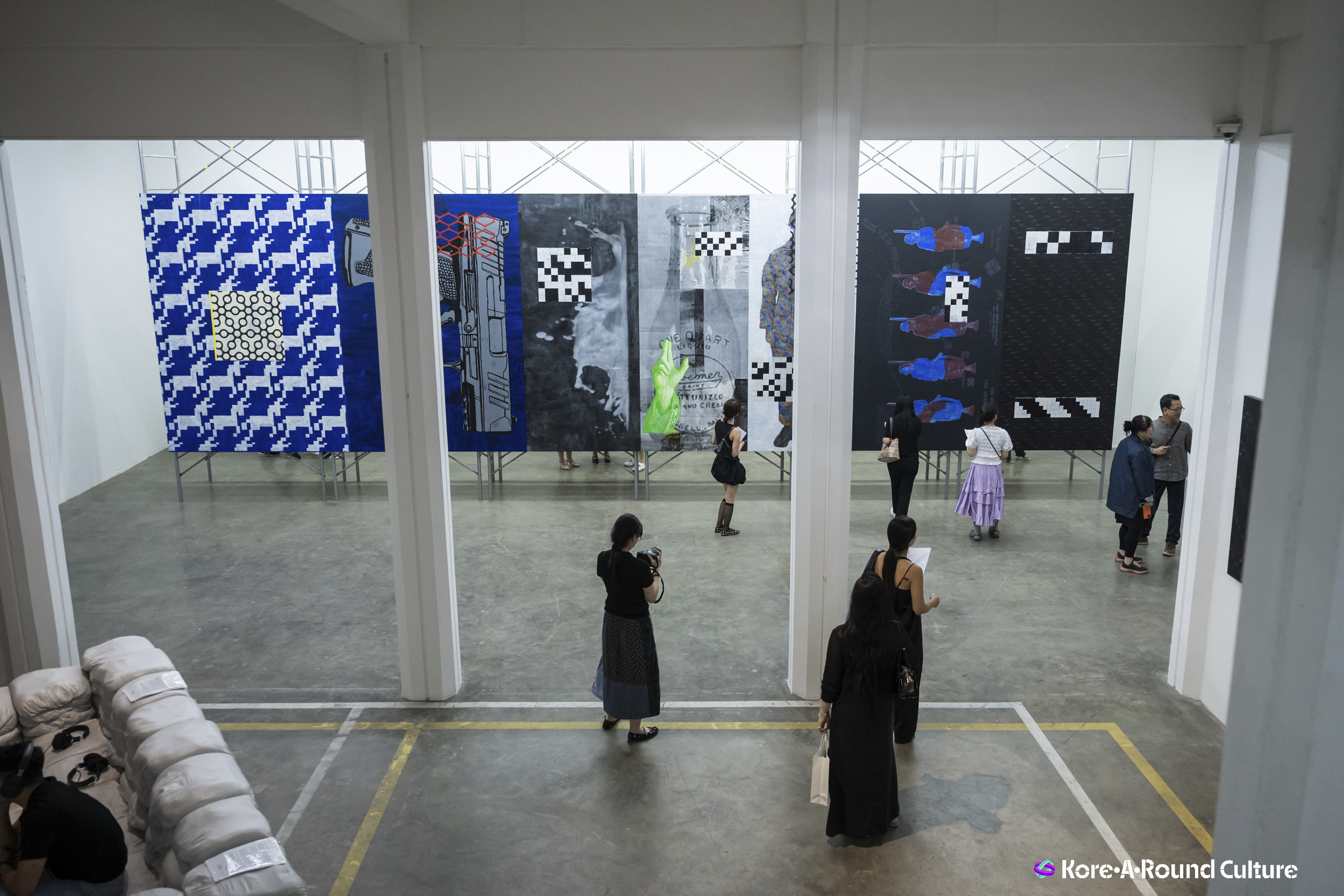
Q4. How is the Berlin edition of “Uni form” exhibition in November being planned?
Art Director Johann Nowak: For the Berlin exhibition, our plan is to transform the works from paintings into digital and moving-image forms. We will also invite Korean artists to participate, along with artists from Berlin. The goal is to find the most compelling way to convey the theme of “Uniform” within this exhibition. I believe that this entire process is a truly valuable and meaningful endeavor.
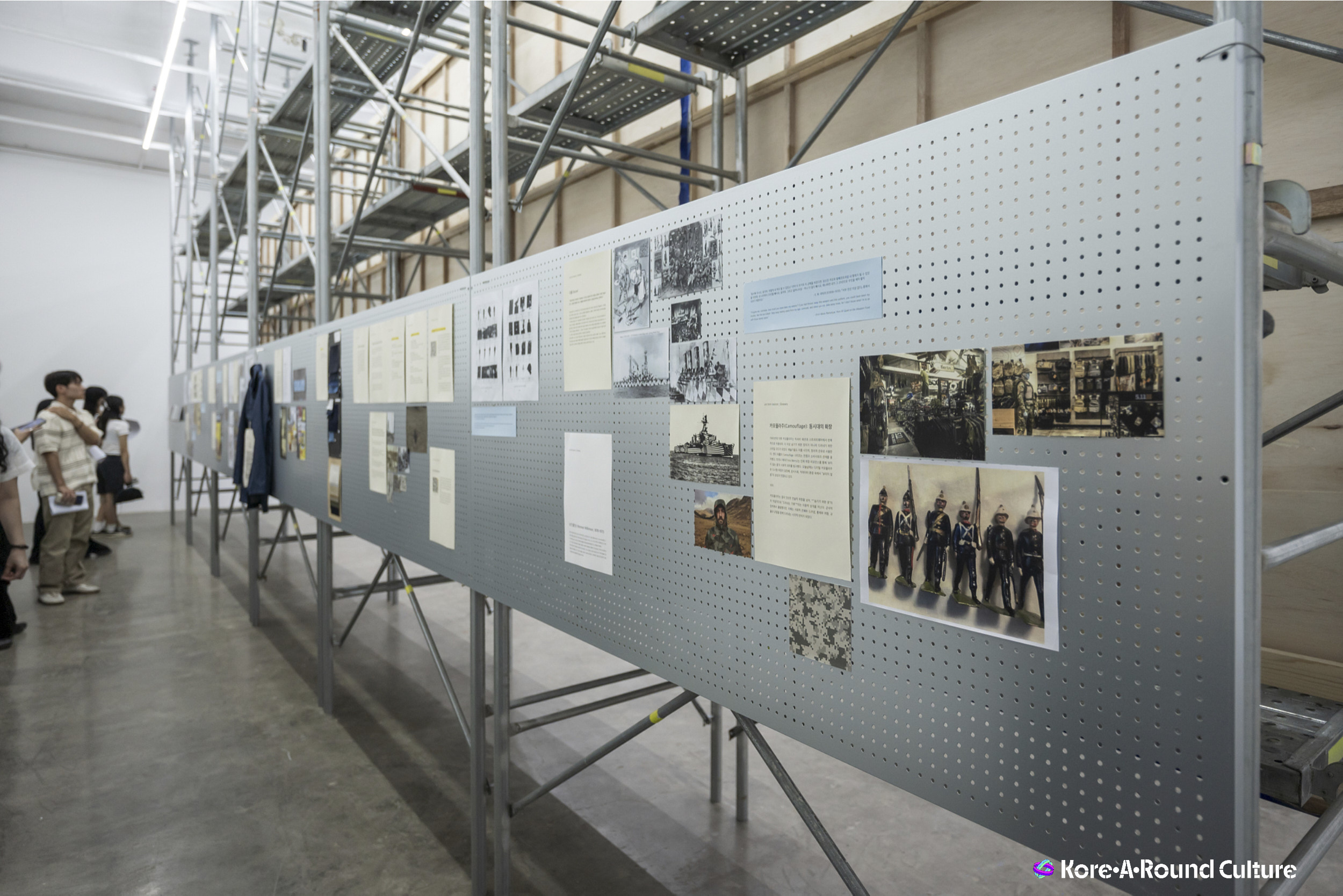
Q5. How was your experience participating in Korea·A·Round Culture?
Curator Shin Bo-seul: I think this program had a very different structure from the usual support systems. Normally, we propose an exhibition first, and then the funding comes afterward. But this one worked more like a partnership, so we had to decide from the beginning where and how the project would unfold.
In our case, we already had an established network and had been collaborating with our partners for a long time, which made the process smoother. However, for those without such connections, I can imagine it wouldn’t be easy. That said, it’s never too late to build new networks. If people know about this program, they could keep it in mind when meeting other institutions, which I think could be quite beneficial.
The quality of international exchange exhibitions is, of course, important, but what makes this initiative unique is that it emphasizes collaboration rather than simply “shipping off” completed works. Many so-called international exchange exhibitions end up sending artworks abroad without the artist’s involvement. This program, however, encourages building relationships and working together, which I find very special. I believe it also creates opportunities for continued collaboration even after the project officially ends.
Art Director Johann Nowak: What I find most interesting about this project is that it allows us to explore a shared theme through two cultures, Korean and German. The concept of “uniform” carries deep historical significance in both societies, and interpreting it through the lens of art makes the process even more engaging.
Working with Curator Shin has been an enriching experience, and I’ve learned a lot from our conversations. I also find it fascinating that we’re developing this project using both Seoul and Berlin as creative hubs. I believe this collaboration will pave the way for even more exchanges between the two cities, and with the continued support of your organization, such initiatives could expand even further.
Artist Chul Yong CHOI: While this project operates under the “K” title and promotes Korea’s local strengths, I hope it also continues to expand into more international topics like Uniform that connect globally. International exchanges through art can be quite challenging, but they’re meaningful.
Curator Shin Bo-seul: Indeed, one of the biggest difficulties in sustaining cultural exchange is that by the time a theme is developed and explored, the world has already changed. We need more stable and ongoing support systems for such initiatives, but that’s rarely the case. Because of this, few artists are able to grow through long-term exchange. While supporting individual artists is crucial, I also believe that supporting institutional collaborations and the people who make them happen flexibly and continuously are just as important.
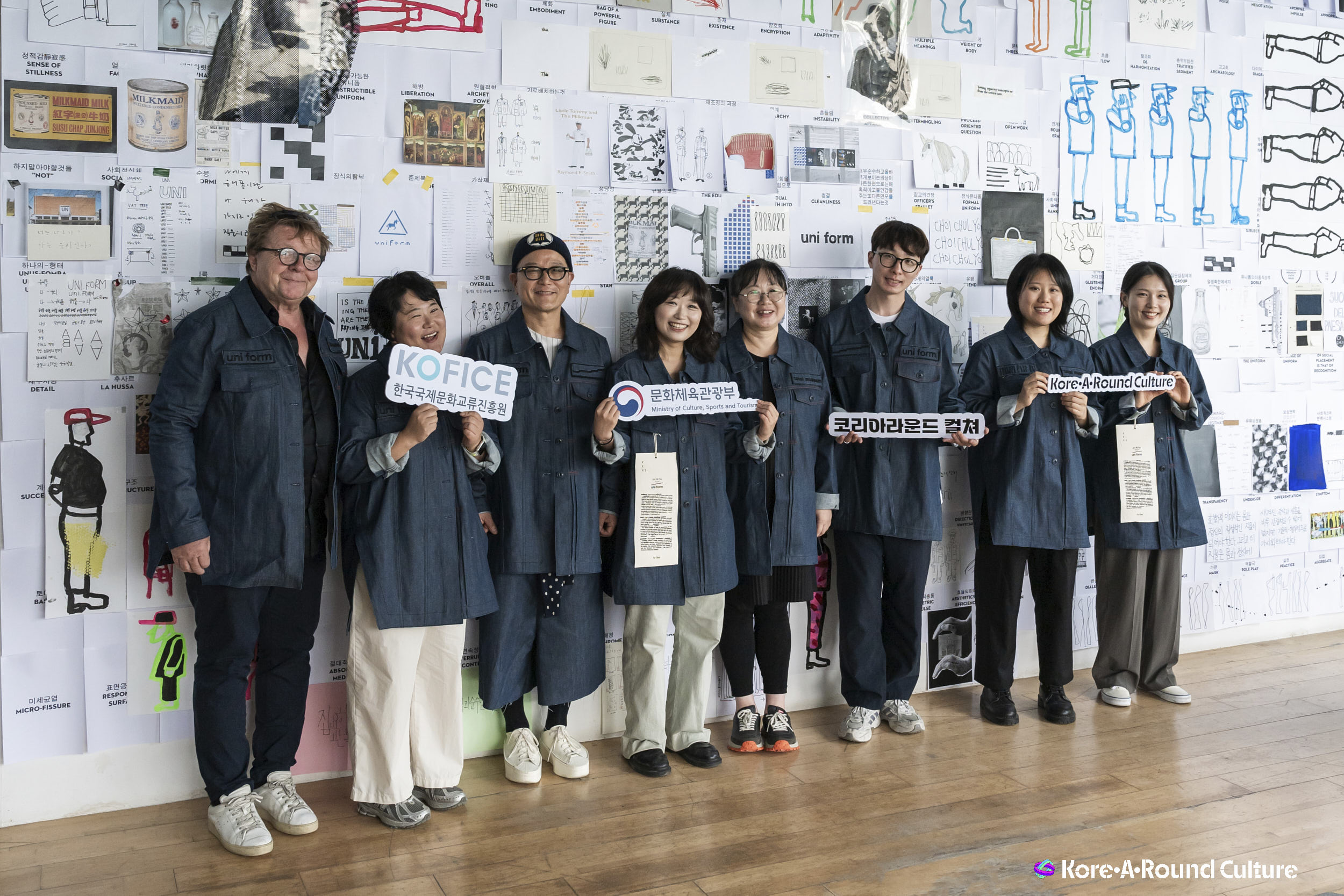
Q6. Do you have any message for the Korean audience?
Artist Chul Yong CHOI: I think we are a generation that constantly lives through “uniforms.” Of course, this might have been true in the past as well, but today, beyond the uniforms we wear to belong to a group, we also follow trends. When something becomes fashionable, everyone wears it. In this sense, the exhibition asks, “What exactly is a uniform?” and explores the existence behind that question saying, “Yes, this too can be a uniform.” I hope visitors will simply come, look around, and take their time to enjoy and feel the experience.
Curator Shin Bo-seul: This exhibition contains too many new ideas and challenges to be described simply as “an exhibition about uniforms.” The exhibition period may be short, but I hope many people will come, enjoy it, and feel inspired. Thank you.